

How Is the Price of Electricity Set?


How Is the Price of Electricity Set?

Electricity, essential yet invisible, can easily fade into the background of everyday life. Then the bill shows up — highlighting what it takes to keep the lights on.
But your charges are far from random, and rates don’t change on a whim.
Buying and generating electricity costs billions of dollars. For investor-owned utilities like Southern California Edison, the California Public Utilities Commission (CPUC) determines how these expenses are spread across all customers. Your share is shaped by multiple factors.
The Bill Breakdown:
- Base Services Charge: A fixed amount that covers essential costs to maintain the equipment, which keeps your home connected to the electric grid.
- Delivery charge: The cost to bring electricity to your home, including the entire journey from transmission to distribution, which varies month to month because of seasonal shifts in energy demand, regulatory cost adjustments and other reasons.
- Energy charge: The cost for the electricity you actually use, measured in kilowatt-hours (kWh). This also changes on a monthly basis, based on factors like your usage level and seasonal rates. There's no markup or profit for SCE.
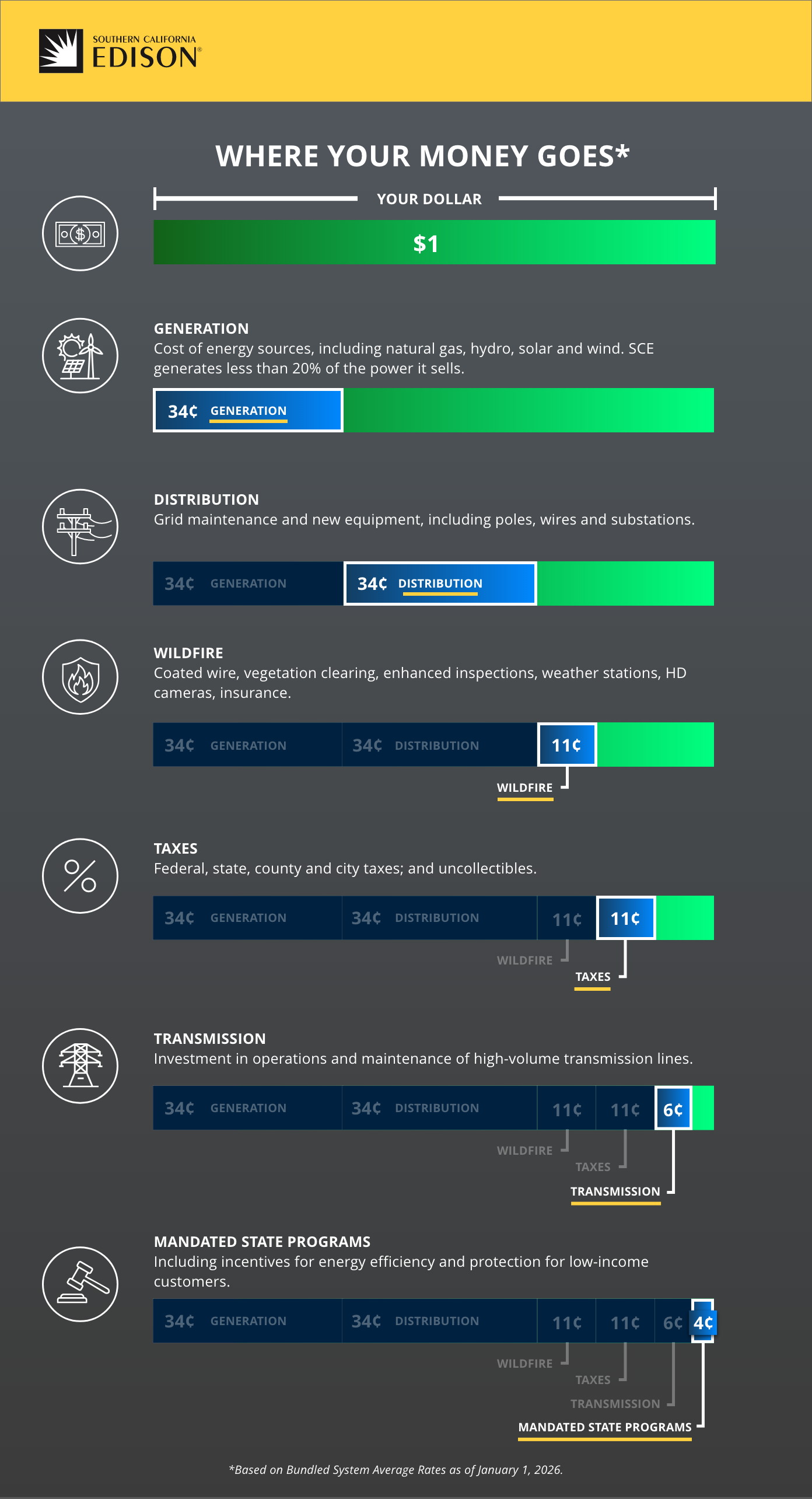
- State programs and policies: Energy-efficiency incentives and protections for low-income customers make up 4% of an average SCE residential bill. Costs of state policies, such as the wildfire fund charge and subsidies for solar customers, are also embedded in existing power generation and delivery charges. These expenses are not controlled by SCE and can make up nearly 25% of the bill.
With all these factors in play, SCE can’t just raise rates whenever it wants. Every change goes through a formal process overseen by the CPUC.
When rates need to be adjusted, utilities file a request called a General Rate Case or other applications. These filings explain why more funding is needed — for example, to strengthen the grid against wildfires, upgrade aging equipment or support clean energy goals.
Powering millions of homes and businesses takes a massive system, and your bill reflects the cost of keeping it running. While this means that prices change over time, SCE takes every opportunity to pass cost savings onto customers. The average rate across all SCE customers continues to be lower than those from other investor-owned utilities in California, with bills expected to stay at or below inflation through 2029.
For more information on SCE’s programs and ways to manage your costs, visit sce.com/billhelp.